
The latest release introduces a significant enhancement to contract configuration for laytime clauses, integrating the claim's laycan dates into clause logic. The system can now trigger specific laytime clauses based on whether key events (like tendering NOR or All Fast) happen inside or outside the claim's agreed Laycan window.
Upon running the automated calculation, when the clause conditions are met, the system applies the clause logic and starts laytime counting accordingly. For example, if NOR tendered occurs before the start of laycan, the laytime commences at the start of laycan + 6 hours.
Note: Only the claim level laycan will be referenced. This does not apply to the laycan within a specific portcall.
This feature automates a previously manual review process, improving efficiency and accuracy. The logic is built into configured clauses and applied consistently. These clauses can be easily added to demurrage statements for clear communication with counterparties, reducing negotiation time and headache.
Example:
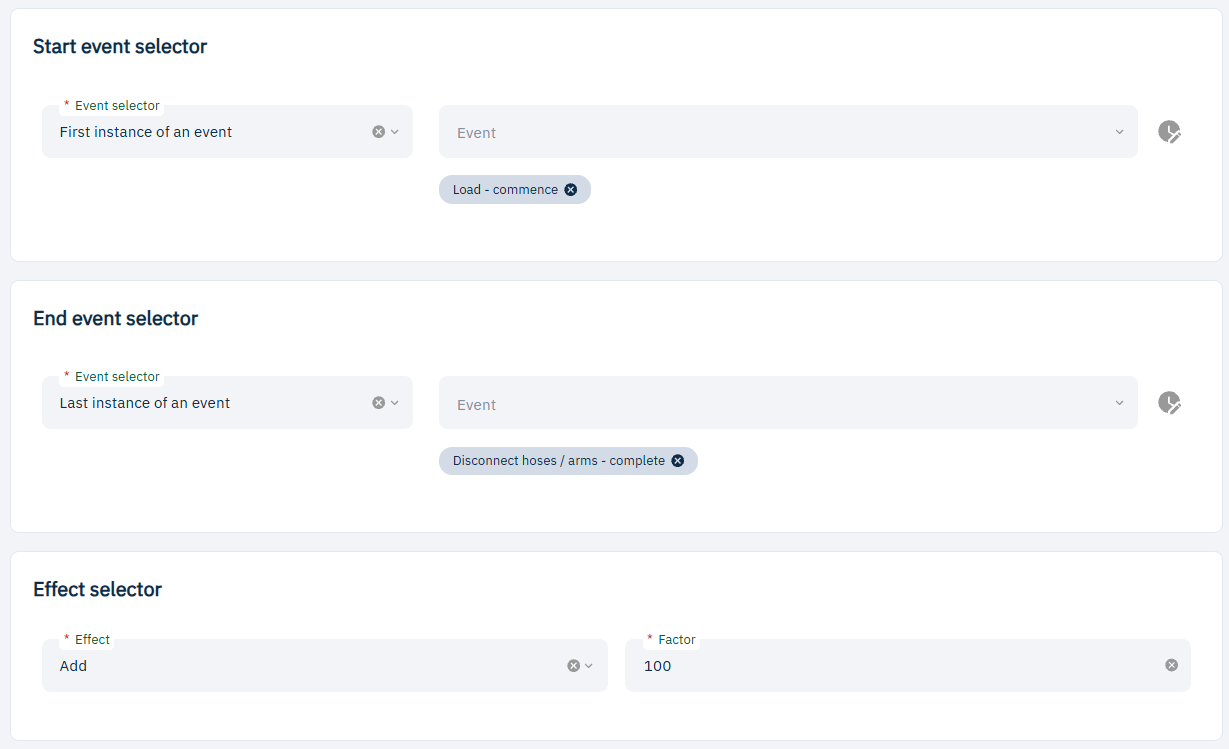
We have a contract that states that if NOR is tendered before the start of laycan from and all fast occurs within the laycan window but before 6am, then laytime commences at the commencement of load and completes at the completion of hose disconnection. We will configure the clause as follows. 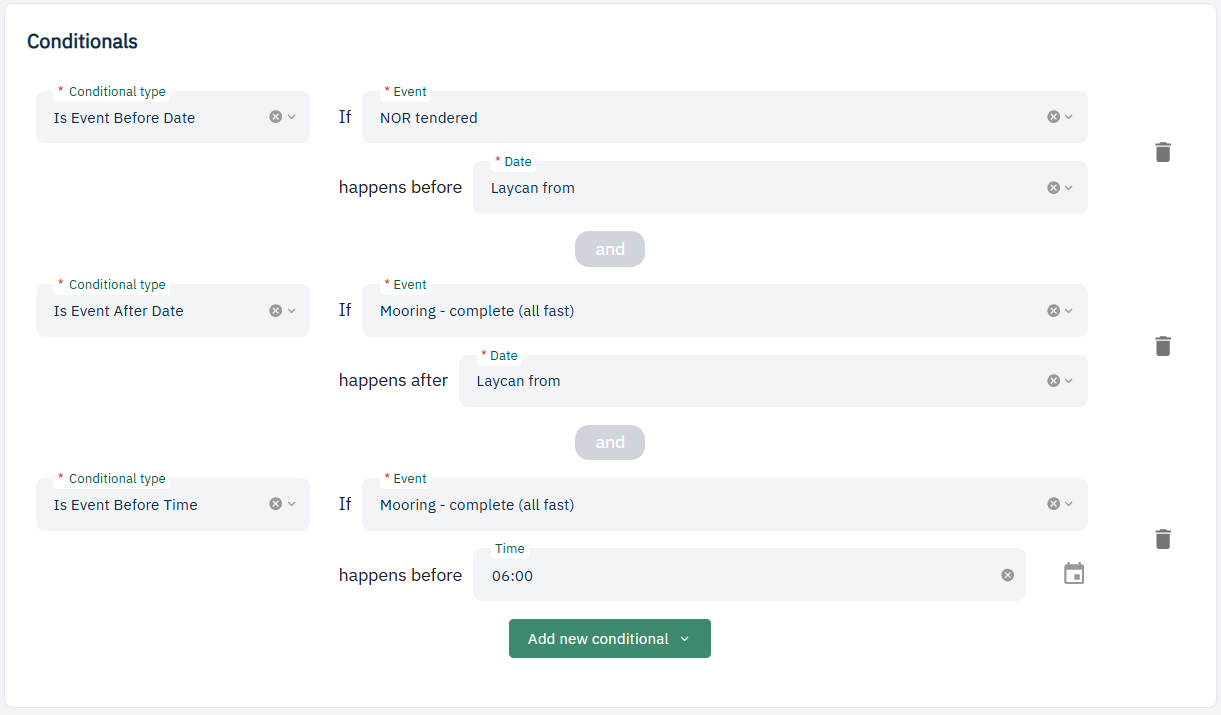
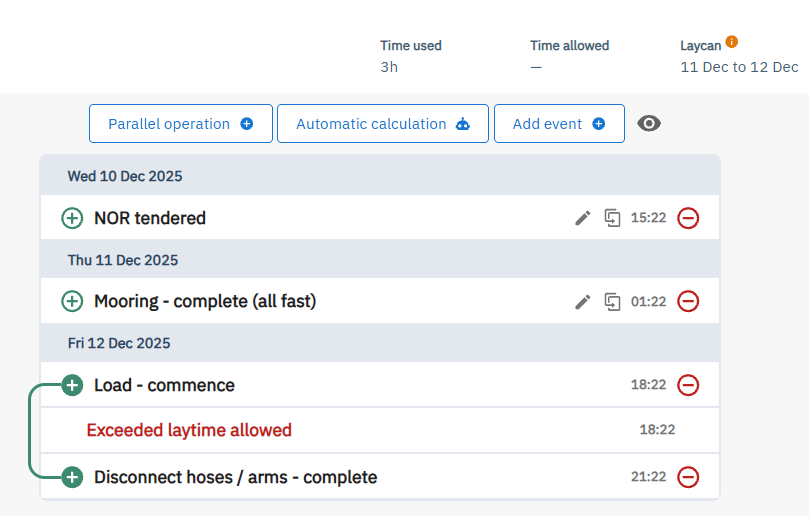
From the SOF we see that NOR was tendered before the start of laycan and all fast was before 8am. As a result, the automatic calculation commenced laytime at "load - commence" per the contract configuration.
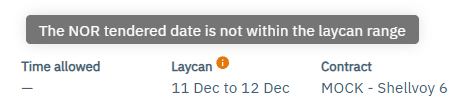
As usual, the fact that the NOR tendered is not within the laycan is highlighted at the top of the page.
To leverage this enhancement, your contract configurations within Voyager Portal need to be updated to include these new laycan-based clause conditions. Contact support@voyagerportal.com to update your contract configurations to include laycan clauses today!