
This guide explains how to read and interpret laytime balances using different calculation methods, focusing on both cumulative and equal distribution approaches. Whether you're reviewing a claim on the main page or examining a demurrage statement, understanding laytime balance ensures accurate time management and financial calculations for your shipping operations.
Key Concepts
Laytime Allowed: The total time permitted for cargo operations
Laytime Used: The actual time taken for loading/unloading
Laytime Balance: The difference between allowed and used time (positive = time remaining, negative = demurrage owed)
Reversible Laytime: Time saved at one port can be transferred to subsequent ports
Cumulative Distribution: Laytime is treated as a running balance throughout the voyage
Equal Distribution: Total laytime is divided equally among all ports
Reading Laytime Balance in Claims
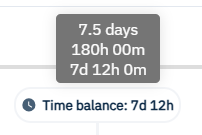
On the main claim page, if your time allowed is reversible, your first pill (summary indicator) shows the total reversible time balance for the entire claim. Hovering over these numbers converts the display between days, hours/minutes, or days/hours/minutes for easier interpretation.
As you progress through port calls, the system displays:
Allowed: Either the starting balance for each port (0 if the running balance is negative) or port specific time allowed if applicable.
Used: from the laytime calculation at that port
Balance: The difference between allowed and used for that port
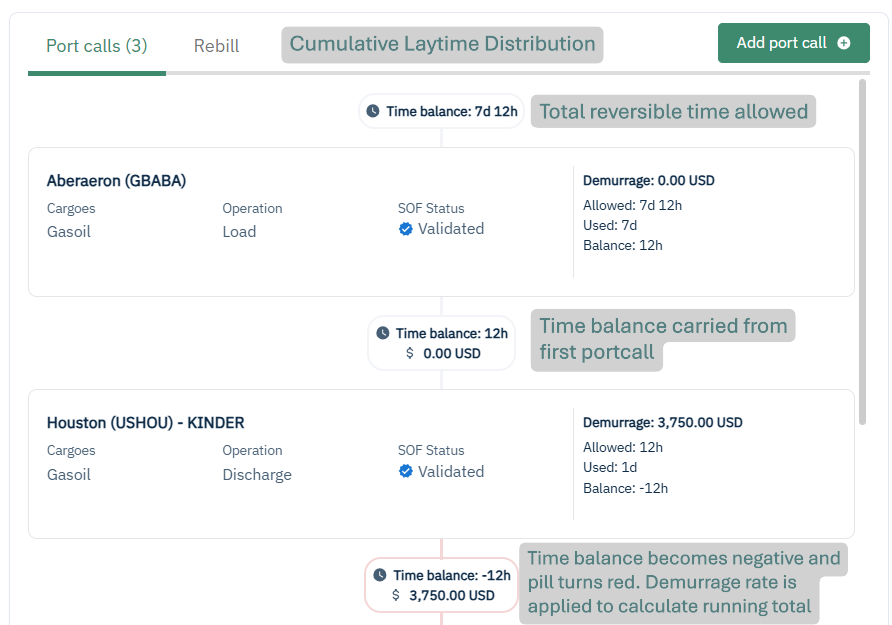
Time balance: The pill between the port calls shows the running balance based on all the used time on port calls above it.
 Example (Cumulative Distribution):
Total allowed: 7.5 days
Port 1: Start with 7.5 days, use 7 days → Balance: 12 hours
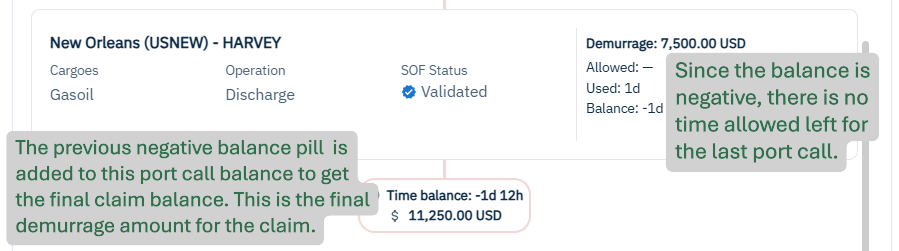
Port 2: Start with 12 hours, use 1 day → Balance: -12 hours
Port 3: Start with 0 days, use 1 day → Balance: -1 day
Total balance: -1.5 days (sum of -12 hours + -1 day)
Distribution Methods Compared
Cumulative Distribution: This method maintains a running balance through the voyage. Each port shows the cumulative balance carried forward. This is the default method and is best for contracts where time saved can be applied to subsequent operations.
Equal Distribution: This method divides total reversible time equally among all ports. This provides a clear allocation per port, regardless of performance at previous ports.
Example (Equal Distribution with 7.5 days over 3 ports):
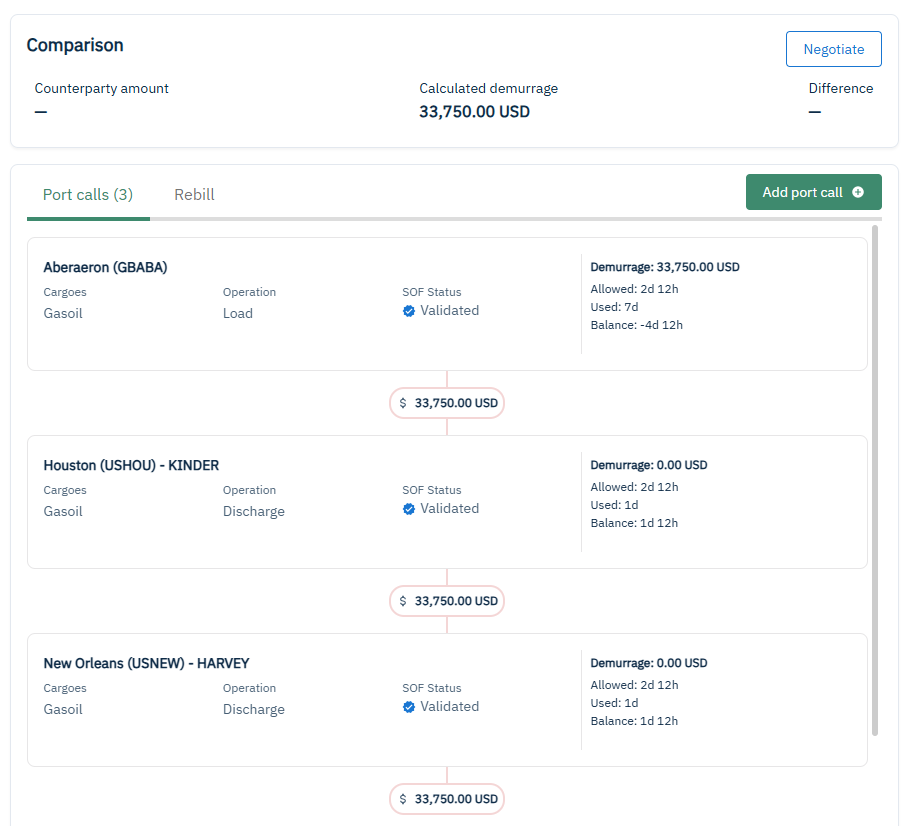
Each port gets: 2.5 days (7.5 ÷ 3)
Port 1: Use 7 days → Balance: -4.5 days
Port 2: Use 1 day → Balance: +1.5 days
Port 3: Use 1 day → Balance: +1.5 days
Total: (-4.5 + 1.5 + 1.5) = -1.5 days
Non-Reversible: This method requires allowed time entered into each port. Time balances do not roll over.
Example (Non-Reversible with 2.5 days entered into each port):
Each port gets: 2.5 days
Port 1: Use 7 days → Balance: -4.5 days
Port 2: Use 1 day → Balance: +1.5 days
Port 3: Use 1 day → Balance: +1.5 days
Total: (-4.5 + 0 + 0) = -4.5 days
Advanced Laytime Configurations
Port-Specific Laytime
For situations where certain ports have different allowances than the reversible laytime:
Use case: Canals, transits, or special port arrangements
Implementation: Enter specific days/hours for individual ports
Important: Port-specific time is excluded from the reversible running total shown in the main balance of the claim and the statement. It will only appear in the port details. Any reversible time will be shared across the other port calls in the claim.
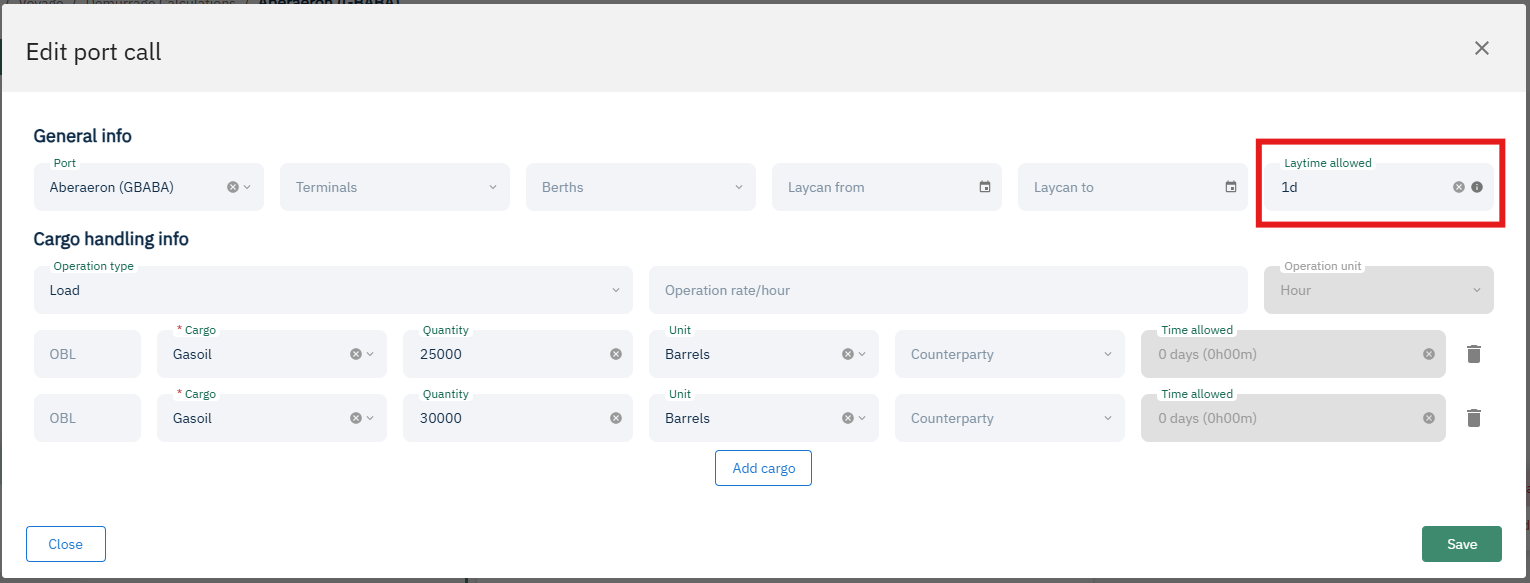
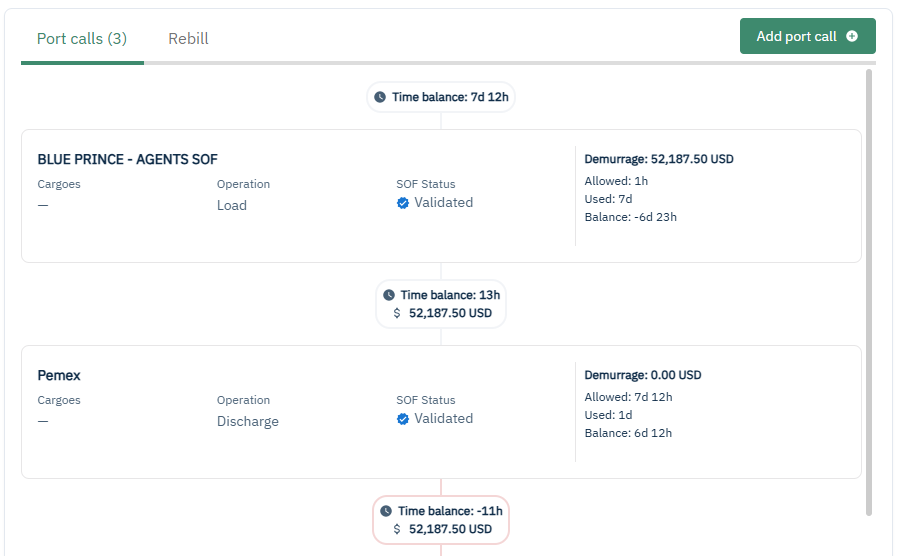
Using the same cumulative example as before, but adding 1h to the load port specific allowed laytime, the first pill (the reversible total) remains at 7d12h. The load port now has an additional 1h of allowed laytime so the time balance after this first port call is now 13h. The full reversible time allowed now appears in the first discharge port call, but the final balance still matches in the end except for the 1 hour of additional time added.
If your contract is written that you get an additional X hours per port that are reversible, add it to the claim level allowed laytime instead of using port specific. This is reversed for non-reversible time.
Operational Rate Calculations
When contracts specify rates like "1,000 barrels per hour":
The system converts cargo quantities to time allowances
Added time is either applied to specific ports (if non-reversible) or distributed across the voyage (if reversible)
Example: 55 hours additional loading time added to a port's allowance
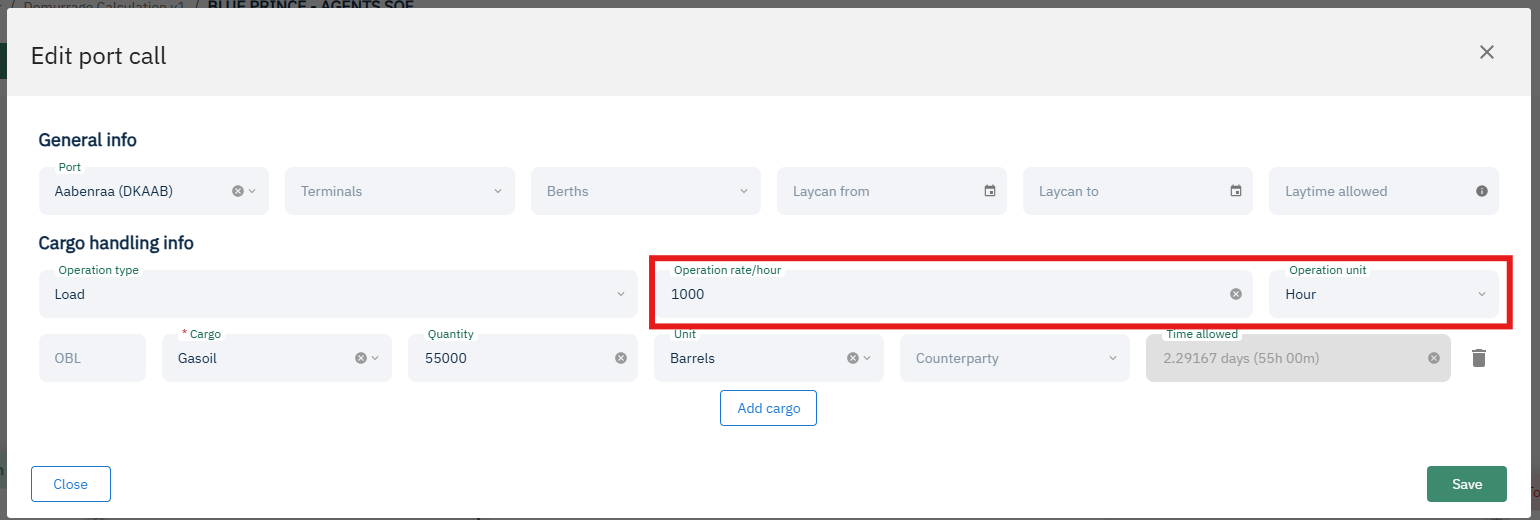
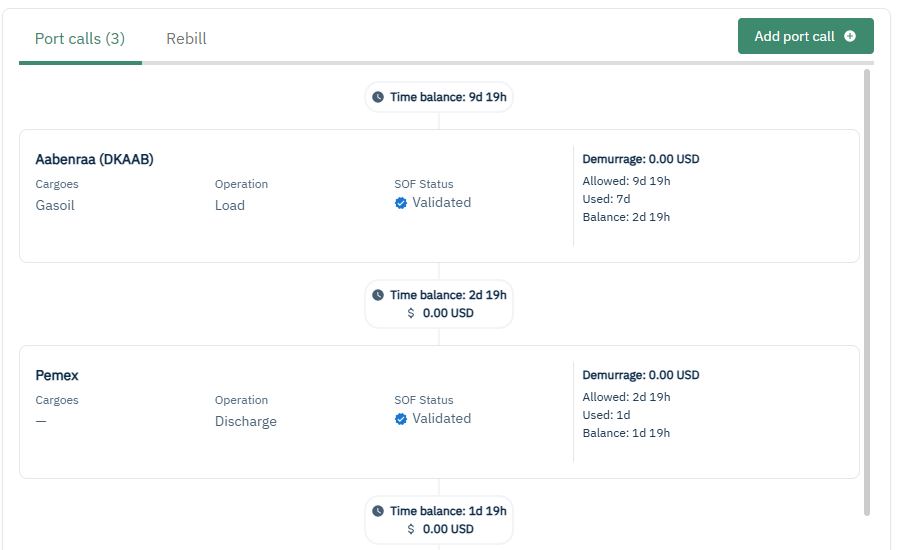
Using the same cumulative example as before, but adding 55h to the operational rate allowed laytime, the logic works the same but additional time has been added to the starting point of the reversible laytime allowed, bringing it up to 9d19h.
Downloading Demurrage Statements
Both distribution methods generate detailed statements showing:
Summary section: Total reversible allowed, used, and balance
Port details: Individual port calculations
Final calculation: Balance multiplied by demurrage rate (if applicable)
Balance Discrepancies
If calculations seem incorrect:
Check distribution method settings
Verify port-specific allowances aren't double-counted
Confirm operational rates are correctly converted to time
Review whether reversible laytime is properly configured
Configuration Recommendations
Use port-specific time only when a port is truly unrelated to others
For "one day per port" scenarios, add the total days to your main allowance rather than configuring each port separately
When in doubt, choose cumulative distribution for simpler tracking